

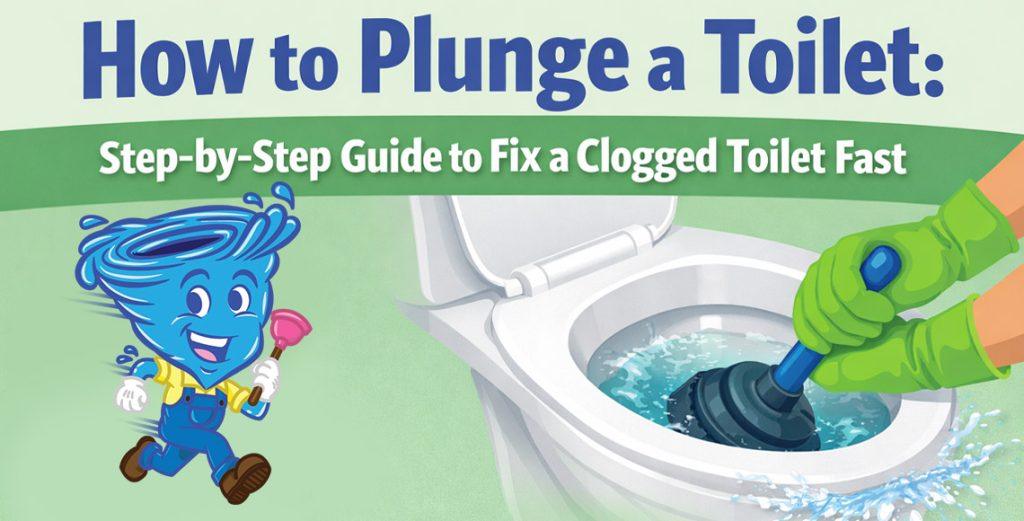
A clogged toilet is messy and urgent, but most toilet clogs can be cleared with the right plunging technique. The problem is usually poor form, rushing, using the wrong angle, or not creating a tight seal, which leads to weak suction and a toilet bowl that won’t drain properly.
To plunge a toilet, place a toilet plunger over the toilet’s drain hole, make a tight seal, then push down gently and pull up firmly in a steady plunging action. Repeat until the blockage breaks, the water level drops, and the toilet flushes normally.
Step-by-Step Process on How to Plunge a Toilet
Do not flush again
If you have a clogged toilet, do not keep flushing it. A second flush can make the toilet bowl fill too high and cause overflow onto the floor.
If the water level is already high, wait a minute before doing anything else.
Protect the area
Put paper towels or towels around the base of the toilet. Wear rubber gloves before you start plunging.
This keeps the floor protected and makes cleanup easier if water splashes out of the bowl.
Check the water level in the toilet bowl
Your plunger needs enough water in the bowl to work properly. The plunger cup should be partly covered so it can create pressure and suction.
If the bowl is too full, remove a little water with a small cup. If there is too little water, let the toilet bowl fill slightly with water from another source.
Place the plunger over the hole
Set the plunger head directly over the toilet’s drain hole. The goal is to create a good seal before you begin.
A flange plunger works best because the flange fits into the opening more securely. A sink plunger or cup plunger is better for sinks and tubs, but it does not usually seal as well in a toilet bowl.
Push down slowly first
Before you use force, push the plunger down gently. This removes trapped air.
If you start too hard, the air can splash dirty water back at you instead of helping unclog the toilet.
Start plunging with steady force
Once the seal is set, start plunging with controlled movement.
Push down, then pull up without breaking the seal. This plunging action creates pressure in the toilet drain and suction in the toilet trap, which helps break the clog apart.
Do not jab wildly. Strong, steady movement works better than fast, sloppy plunging.
Repeat for 15 to 20 seconds
Keep the plunger sealed to the drain and repeat the motion several times.
Most toilet clogs clear after a short round of proper plunging. If the blockage is stubborn, do another round before testing it.
Lift the plunger and check the bowl
After plunging, lift the plunger carefully and watch the water level.
If the water level drops, that is a good sign. It usually means the drain clog has started to move through the pipes.
Flush once to test
Flush the toilet one time only.
If the toilet flushes normally, the toilet unclogging is complete.
If the toilet backs up again, repeat the process.
Why This Works
A plunger does not just push waste down. It works by creating a seal and moving water back and forth inside the drain. That pressure helps break up the blockage, while suction helps pull it loose.
That is why the right plunger and the right technique matter more than brute force.
Quick Guide: How to Plunge a Toilet Properly
| Step | What to Do | Why It Matters |
|---|---|---|
| 1 | Check water level in the toilet bowl | Prevents overflow and mess |
| 2 | Use a flange plunger | Creates a better seal than a sink plunger |
| 3 | Position over the drain hole | Ensures proper pressure and suction |
| 4 | Push down slowly first | Removes trapped air |
| 5 | Start plunging (push & pull) | Builds pressure and suction to break clog |
| 6 | Keep a tight seal | Prevents loss of force |
| 7 | Repeat 10–15 times | Helps clear stubborn clogs |
| 8 | Test with one flush | Confirms if the toilet unclogging worked |
Common Plunging Mistakes That Keep Toilets Clogged
Even when people try to fix a clogged toilet themselves, a few simple mistakes can stop the plunger from working properly. Avoid these common problems to improve your chances of clearing the clog fast.
Using the wrong plunger
Use a flange plunger, not a sink plunger. A flange plunger creates a better seal in the toilet’s drain hole and works more effectively on toilet clogs.
Starting without a tight seal
Make sure you have a tight seal before you start plunging. Without that seal, you lose the pressure and suction needed to move the clog.
Pushing too hard too fast
Push down slowly first to remove trapped air. Starting too fast can force dirty water upward and cause splashing instead of helping unclog the toilet.
Using excessive force
Use steady, controlled plunging. Wild or overly aggressive force usually works worse than smooth, consistent pressure and suction.
Breaking the seal between plunges
Keep the plunger sealed while you push and pull. Lifting it too much breaks the pressure needed to clear drain clogs effectively.
Stopping too soon
Plunge 10–15 times before stopping. Most toilet clogs need several strong, consistent motions before the blockage starts to move.
Flushing too many times
Test with one flush only. Repeated flushing can raise the water level and increase the risk of toilet overflow.
Overloading the toilet
Avoid flushing too much toilet paper or waste at once. Overloading the toilet is one of the most common reasons clogs happen in the first place.
A toilet plunger works best with the right tool, the right seal, and the right technique. Small mistakes can make a simple clog much harder to clear.
Extra Tips That Can Help Clear a Toilet Faster
The Hot Water Trick
If the clog is organic (like toilet paper or human waste), hot water can help break it down.
Pour a bucket of hot (not boiling) water into the toilet bowl from about waist height.
This adds extra pressure to the drain and can sometimes clear clogs without needing heavy plunging.
The Dish Soap Hack
Add a squirt of dish soap into the toilet bowl before plunging.
Dish soap acts as a lubricant inside the pipes.
It helps the clog slide through the toilet trap more easily when you start plunging.
Let it sit for a few minutes before you begin.
Prep Your Plunger for a Better Seal
Before you start plunging, run the plunger head under hot water for about a minute.
This softens the rubber and helps create a better seal over the toilet’s drain hole.
A softer plunger means:
- stronger suction
- better pressure
- faster results
Still Clogged? Here’s What to Do Next
What if the Toilet Still Will Not Unclog?
If plunging does not work after a few proper attempts, the blockage may be deeper in the drain.
At that point, you may need:
- a toilet auger
- a drain snake
- a licensed emergency plumber
A toilet auger can reach deeper into the toilet drain and break up a stubborn clog that a plunger cannot reach.
When to Call a Plumber
Call a plumber if:
- The toilet keeps clogging
- The toilet backs up repeatedly
- Water rises every time it flushes
- More than one drain is slow
- You suspect a sewer issue

Final Thoughts
Knowing how to plunge a toilet properly can save time, stress, and a bigger mess. The key is simple: use the right plunger, create a good seal, and use steady pressure and suction to break the blockage.
Most toilet troubles can be handled this way. If not, the next step is usually a toilet auger or professional plumbing help.
Need help now? Contact Environmental Plumbing for quick and reliable toilet unclogging.
